The Nærstad Model for Late Blight Risk Assessment
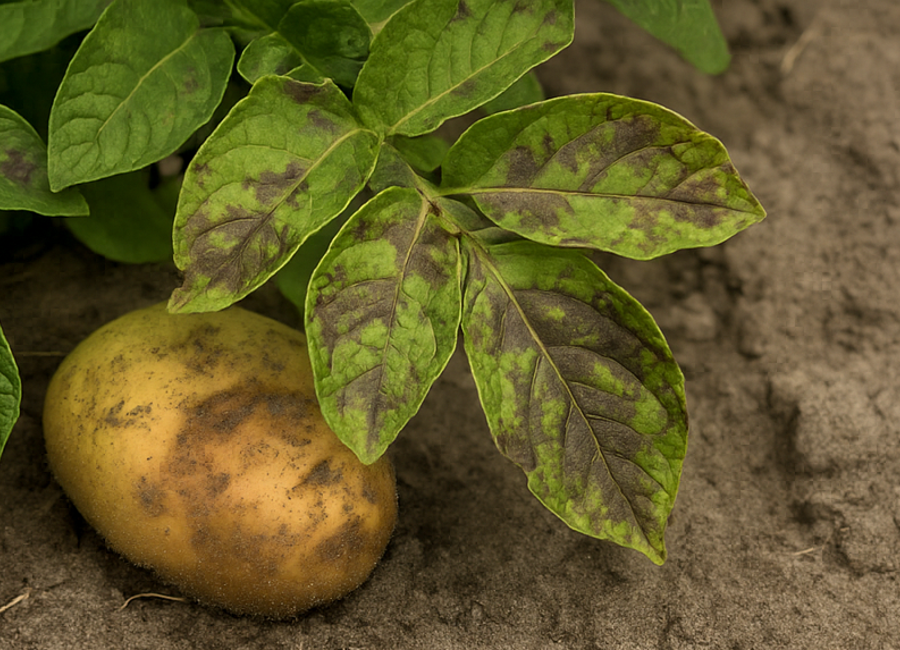
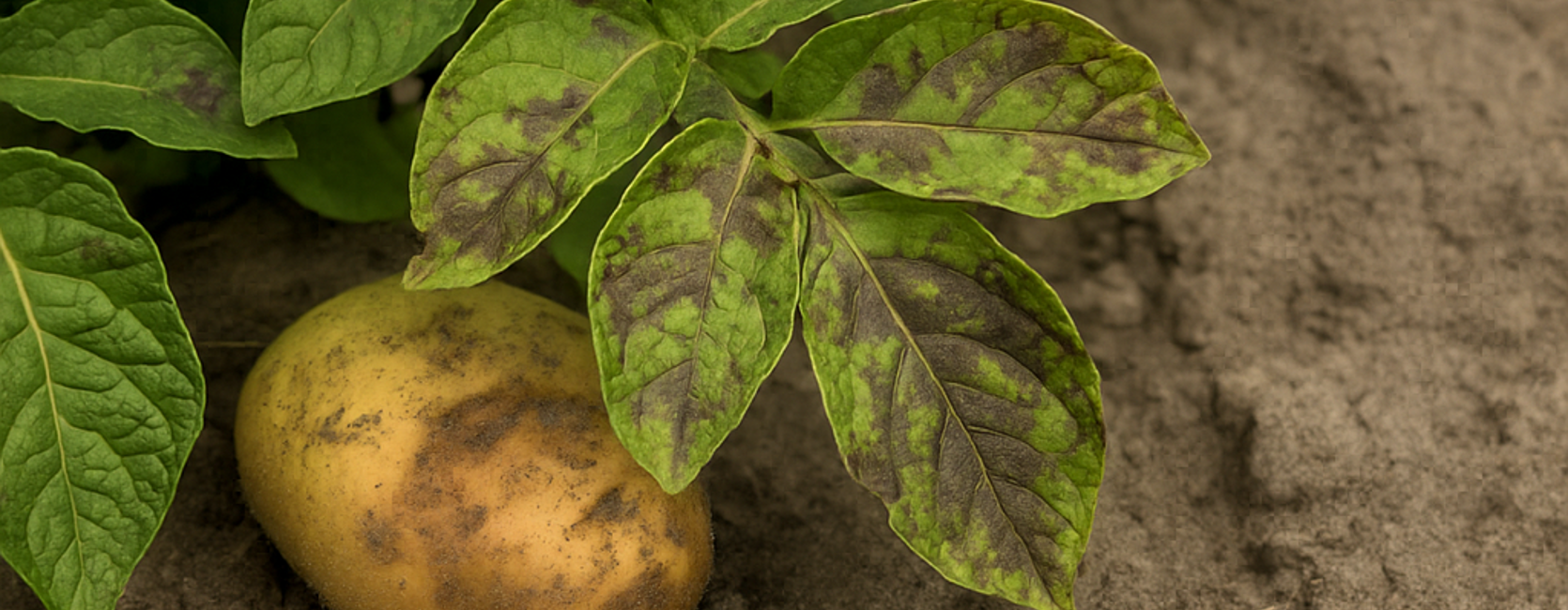
Late blight (Phytophthora infestans) remains one of the most destructive diseases in potato production worldwide. Accurate timing of preventive measures is critical, both to protect yield and to avoid unnecessary treatments.
The Nærstad model is a weather-based decision support model developed to estimate the risk of late blight infection. It is widely used in Norway as part of national advisory services and has been scientifically validated for Nordic growing conditions.
What the Nærstad Model Does
The model estimates periods with high infection risk by combining:
-
air temperature
-
relative humidity
-
precipitation
-
leaf wetness duration
-
solar radiation
By analysing these factors on an hourly basis, the model identifies conditions that favour spore germination and infection. The result is a clear, time-based risk signal that supports agronomic decision-making in the field.
Why Weather-Based Models Matter
Late blight outbreaks are driven by weather, not by calendar dates. Warm, humid conditions with prolonged leaf wetness create ideal environments for infection, regardless of geography.
Weather-based models help growers:
-
anticipate infection risk before visible symptoms appear
-
time fungicide applications more precisely
-
reduce unnecessary treatments
-
improve both economic and environmental outcomes
These challenges are common across most potato-growing regions of the world.
Validated in the Nordic Region
The Nærstad model has been validated and calibrated using Nordic field data and weather conditions. In this region, it has proven to be a reliable and practical tool when combined with standard agronomic knowledge.
This validation gives a strong scientific foundation, but it is important to understand its intended scope.
Use Outside the Nordic Region
Outside the Nordic region, the Nærstad model should be used as a decision support tool, not as a standalone prescription.
Climatic drivers of fungal diseases are fundamentally similar across large parts of the world, especially in temperate and humid regions. Temperature, moisture, and leaf wetness influence pathogen development everywhere. This makes the model relevant well beyond its original geography.
However, local factors such as:
-
potato varieties
-
cropping systems
-
irrigation practices
-
local pathogen pressure
-
microclimate effects
can influence how risk signals should be interpreted.
For this reason, use of the model outside the Nordic region requires:
-
agronomic expertise
-
local knowledge
-
validation against field observations over time
Data Sources and Global Availability
To enable use beyond Norway, the model can now be supported by global, open weather data sources. These provide:
-
short-term weather forecasts
-
historical weather data
-
radiation and wind data needed for leaf wetness estimation
Where direct leaf wetness measurements are unavailable, leaf wetness is estimated using established meteorological methods. This approach is common in international plant disease modelling, but it introduces additional uncertainty that users should be aware of.
Practical Recommendation
-
In regions where the model has been validated, it can be used with high confidence as part of an integrated disease management strategy.
-
In new regions, the model should be introduced gradually and evaluated against real disease observations.
-
The model works best as a complement to local agronomic judgement, not a replacement for it.