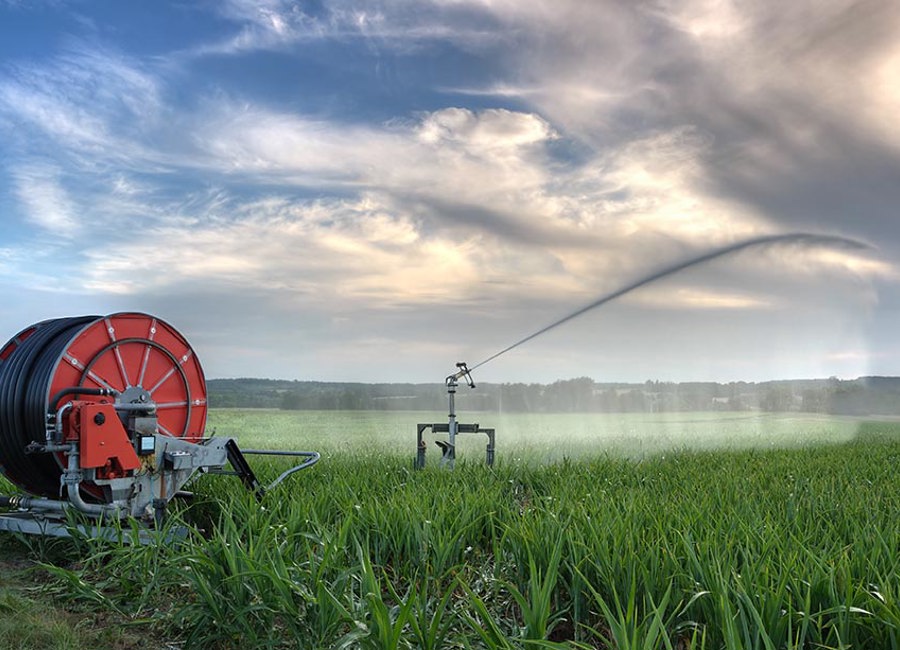
The expected speed setting defines the typical movement speed of the irrigation system.
Options include:
-
0–20 m/h – typical for hose reel irrigators
-
20–40 m/h – moderate movement systems
-
Over 40 m/h – faster irrigation equipment
This setting helps the system filter GPS measurements and determine when the machine is moving or stationary. Choosing the correct speed range improves movement detection and standstill alerts.
The irrigation type defines how the system interprets vibration patterns and movement behavior.
Available configurations include:
Each irrigation type has unique vibration characteristics and movement patterns. Selecting the correct type allows the sensor to apply the most appropriate detection algorithms.
This parameter defines the distance an alarm is sent from a point of interest or end point.
It helps the system determine when the irrigation system is approaching completion and improves the accuracy of end-of-run notifications.
The sprinkler configuration setting allows the system to understand how water is distributed by the irrigation equipment. Different sprinkler types apply water in different patterns and flow characteristics, which affects how irrigation performance and water application are calculated.
Selecting the correct sprinkler configuration ensures that the system can correctly estimate irrigation coverage, application rate, and water distribution.
Autostart allows the sensor to automatically detect when irrigation begins based on vibration patterns.
When enabled, the sensor monitors vibration levels and automatically switches to irrigation monitoring once stable flow is detected.
This eliminates the need for manual start commands and ensures that irrigation events are recorded automatically.
The vibration sensitivity setting controls how sensitive the sensor is to vibration signals.
For example:
-
Standard sensitivity works well for most irrigation systems
-
Higher sensitivity may be useful in low-vibration installations
-
Lower sensitivity can help avoid noise or false triggers in high-vibration environments
Proper sensitivity tuning ensures reliable flow detection while minimizing false alarms.
This parameter determines how long the sensor verifies vibration activity before confirming that irrigation has started.
Typical options include slower or faster detection times depending on the stability of the irrigation system.
Longer confirmation times improve stability and reduce false starts.
Users can switch between two primary operating modes:
Irrigation Mode
Used during irrigation season to monitor water flow, movement, and irrigation performance.
Storage / Environmental Mode
Used during the off-season to monitor environmental conditions such as temperature and humidity inside storage facilities.
This flexibility allows the same device to provide value year-round.
Frost monitoring is designed to alert growers when environmental conditions approach freezing temperatures that may damage crops.
The sensor continuously monitors air temperature and sends an alert when the temperature falls below a predefined threshold. By default, the frost alert is triggered at 0.7 °C, but this value can be adjusted depending on crop type, field conditions, or grower preference.
Early frost alerts allow growers to take preventive action, such as starting frost irrigation, which helps protect crops from frost damage. During frost irrigation, a thin layer of water freezes on the plant surface, releasing latent heat and helping maintain plant temperature near 0 °C, which can prevent harmful freezing within the plant tissue.
By receiving early notifications, growers can respond in time to protect sensitive crops such as fruit trees, vegetables, and berries during cold nights.
For best performance, users should configure the sensor settings according to:
-
irrigation system type
-
expected machine speed
-
sprinkler configuration
-
field layout
-
environmental conditions
Correct parameter configuration ensures the sensor can accurately interpret irrigation activity and deliver reliable monitoring results.